
Pop Warmer: The Winter Olympics Are Running Out of Mountain
Plenty of sports are affected by warming, but this feels more like a requiem for all the winter sports at once.


Welcome to a new series I've been pondering for a year or two now: Pop Warmer! Pop culture, including movies, tv, and sports in particular (video games and music would also be interesting, but well, I'm carving out a lane; and also I don't really play video games and am too old to have any idea about new music) are increasingly engaging with or being impacted by climate change in one way or another. Chances are, this low hum will get louder and louder as warming worsens, and so I thought it would be fun (read: grim!) to dig into some of those connections a bit. As to that little graphic up there: is that horrible bit of photoshopped (free online version, obv) clipart a direct rejection of the use of AI image generators? Yes. Does it look like shit? Also yes.
Anyway. The plan is to alternate: sports, movies, sports, movies, and so on, with no promises as to frequency. To start, as you might imagine: the Winter Olympics.
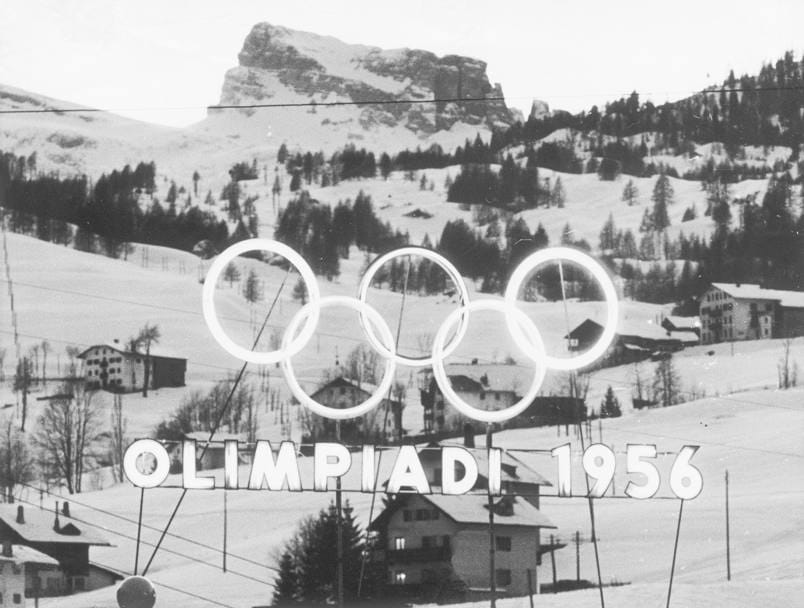
Seventy years ago, the Italian town of Cortina hosted the seventh-ever Winter Olympics. The Games are back there this year (along with Milan), only it's not the same town: average February temperatures are 6.4 degrees Fahrenheit warmer than they were in 1956.
That is, obviously, not great for a collection of sports requiring snow and ice to allow people to hurtle down mountainsides at dramatically unsafe speeds. Cortina is high enough that it still does get a bunch of snow (though organizers said before the Games started they expected 85 percent of snow to be artificial) — but it's not just snow. The area sees 41 fewer days at or below freezing each winter now than it used to.
Other Winter Olympics hosts are running out the required stuff entirely. Four years ago, Beijing relied almost completely on artificial snow. And increasingly, research suggests that the number of places around the world that could feasibly host one of these events is dropping fast. The specifics depend on the study in question, but none of it seems good: a 2024 analysis found that 52 of 93 potential host locations could have enough snow and cold weather to host by the 2050s, dropping to 46 sites in the 2080s. Another, from the World Economic Forum this year, is more dire: by 2040, only ten countries will be on the table as hosts.
The athletes and coaches themselves make it seem even worse. A 2023 study based on a survey of hundreds of them on what makes for "fair and safe conditions" determined that only one — Sapporo, Japan, if you're curious — city would be acceptable by 2100.
The Olympics are an expensive affair, and not one that can easily just be moved farther north, or farther up the slopes. Annapurna is not playing host to the giant slalom any time soon (and even its base camp, at well over 13,000 feet, is getting disturbingly messed up by warming), nor is Svalbard. The logistical requirements were already relatively limiting, and if a given spot can't more or less promise cold enough temperatures then the decadal planning process requires it to just be taken off the board. You can't take the risk.
In general, I have never been a huge Olympics enjoyer (Paris 2024 was an exception, for various reasons). But I do understand the Games' importance on a cultural level, and there is something viscerally distressing about our ongoing collective climate failures pushing the Winter Olympics off the edge of a ski jump ramp. Plenty of sports are affected by warming, but this feels more like a requiem for all the winter sports at once, an assault on the once-every-four-years joy of the freest free skate you'll ever see, the best-ever/last-place performances from countries who have almost never made it to the Games, and so on. There are small-scale fixes to some climate-sports issues; glaciers retreating and collapsing, mountains running out of snow, and entire countries more or less losing the concept of "winter" aren't among them.